Tag: 19th century

(AT LEAST) TWO LESSONS FROM VINCENT VAN GOGH

(AT LEAST) TWO LESSONS FROM VINCENT VAN GOGH

What’s perspective?

What’s perspective?

Smells Like Papal Spirits

Smells Like Papal Spirits

Alistair's avatarADOXOBLOG

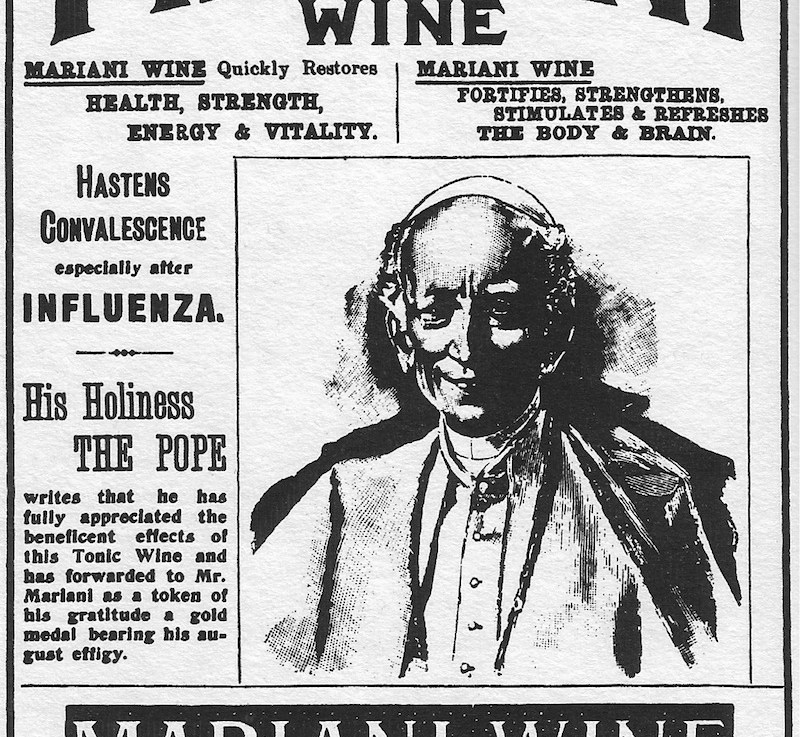
An endorsement by His Holiness the Pope from Graphic, 1899, for Mariani Wine. Leo XIII was Pope from 1878 until 1903 and he had a ticket to ride on the white line highway. The product was pretty much just coca leaves steeped in ethanol, with about six or seven milligrams of cocaine content per fluid ounce. So when the advertisement says Mariani Wine “fortifies, strengthens, stimulates and refreshes” they’re probably right, albeit in a not strictly medicinal Studio 54 style. Other celebrity Mariani space cadets included H.G. Wells, Jules Verne, Henrik Ibsen and Thomas Edison.

As funny as it seems now, until after the First World War substances such as cocaine, Heroin, laudanum (opium dissolved in alcohol) and Chlorodyne (laudanum, cannabis and chloroform) were widely available to all and sundry, children included. There were ads recommending Heroin as a cough medicine, and laudanum as a remedy for a baby’s teething…

View original post 109 more words

A lament for lost sartorial options

A lament for lost sartorial options

Alistair's avatarADOXOBLOG

Some striking colour portrait photographs by Sergei Mikhailovich Prokudin-Gorskii. In some ways they look like they could have been taken last week, but they were actually all made between 1907 and 1915, just before WWI and the Russian Revolution. The splendid example above is of Alim Khan (1880-1944) the Emir of Bukhara, in 1911. Bukhara was a vassal state of the Russian Empire, though the Emir had absolute authority within its borders. It was absorbed by the Soviet Union in 1920, and Alim Khan fled to Afghanistan.

There’s just something about seeing these long-dead people in colour that connects us to them, and to history in general, in way that hardly any monochrome image can achieve. To make them, Prokudin-Gorskii developed a system of exposing three glass plate negatives rapidly in succession, with a red filter, a green, and finally a blue. These three monochrome negatives could then be projected through a lantern similarly equipped…

View original post 171 more words

TRUSTAFARIANS OF THE BELLE ÉPOQUE

TRUSTAFARIANS OF THE BELLE ÉPOQUE

The “cut direct”

The “cut direct”

Alistair's avatarADOXOBLOG

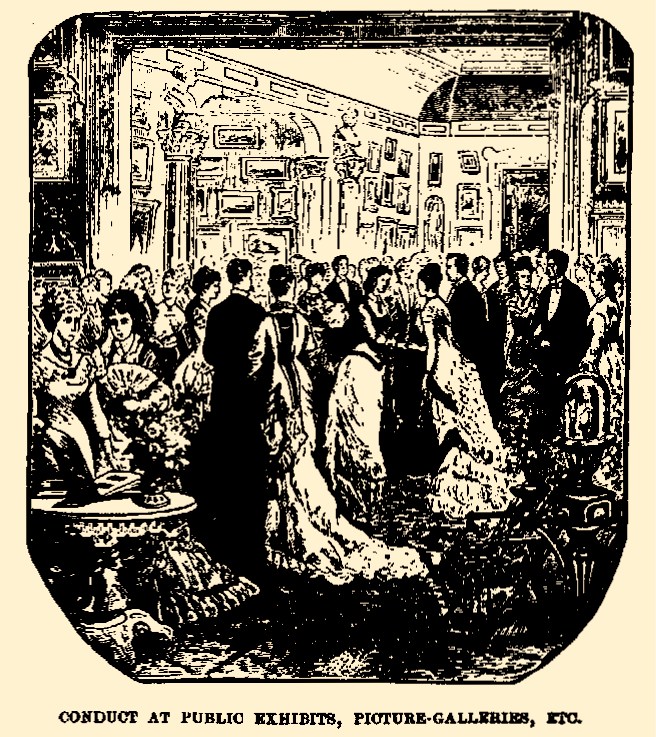
Etiquette: Rules and Usages of the Best Society was published in Australia in 1885 for the benefit of “the better sort” among our colonial cousins. Not the crims, in other words. Some of the advice is very wise, some of it is surreal, while some of it– such as the recommended homemade treatments for acne or grey hair– is liable to end with a trip to the accident and emergency room.

THE “CUT DIRECT”

The “cut direct,” which is given by a prolonged stare at a person, if justified at all, can only be in case of extraordinary and notoriously bad conduct on the part of the individual “cut,” and is very seldom called for. If any one wishes to avoid a bowing acquaintance with another, it can be done by looking aside or dropping the eyes. It is an invariable rule of good society that a gentleman cannot “cut”…

View original post 931 more words

“CONDUCT IN PICTURE-GALLERIES”

“CONDUCT IN PICTURE-GALLERIES”

The incalculable mischief of goats

The incalculable mischief of goats

Alistair's avatarADOXOBLOG

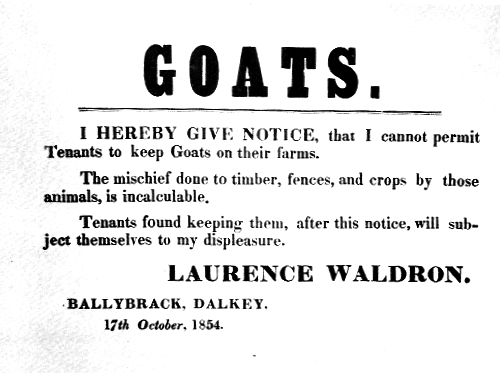
Miscellaneous odd, interesting posters and signs from the aforementioned book The Public Notice. In a sign from 1854 at Dalkey, near Dublin, Laurence Waldron has a peculiarly specific complaint against his tenants:

Goats1854

View original post 491 more words

Imbecile ward keepers wanted

Imbecile ward keepers wanted

Alistair's avatarADOXOBLOG

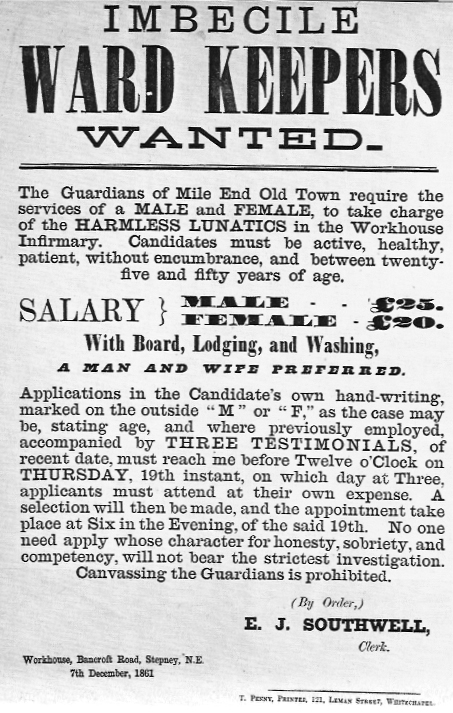
Some scans from The Public Notice (1973, out of print) by Maurice Rickard. It’s a gold mine. First of all, the following poster from late 1861. Despite the ambiguous grammar, they were requesting keepers for a ward of imbeciles, not ward keepers who were imbeciles. Although such terms are now used interchangeably as insults for somebody who’s acting in a way deemed stupid, until well into the 20th century “imbecile” was a respectable diagnosis meaning that a person was more functional than an idiot, but less functional than a moron. In this notice the “imbeciles” are alternatively referred to as “HARMLESS LUNATICS”, which is hardly better. Note also that these poor people (in every sense of the term) were incarcerated in a workhouse, specifically the workhouse of Bancroft Road, Stepney, in north-east London.

ImbecileWardKeepers1861

View original post 251 more words

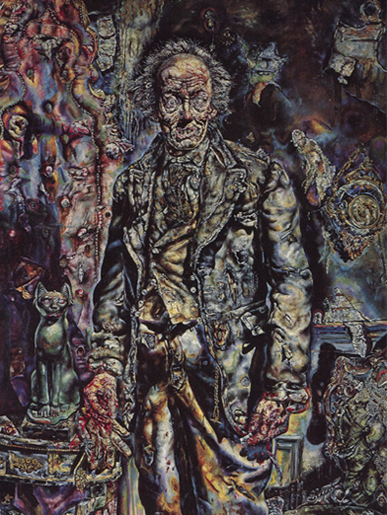
IMAGINARY ARTISTS IV: HALLWARD

IMAGINARY ARTISTS IV: HALLWARD

IMAGINARY ARTISTS II: VAN GOGH

IMAGINARY ARTISTS II: VAN GOGH

Squirrels, stupefied by opium

Squirrels, stupefied by opium

Alistair's avatarADOXOBLOG

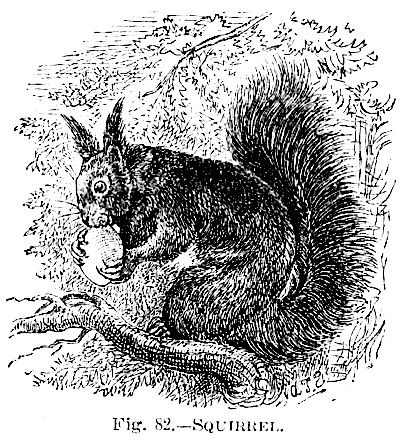
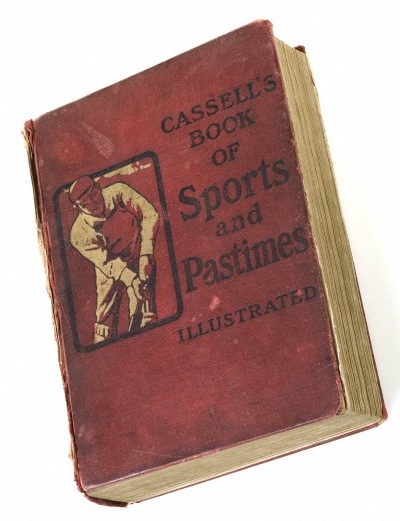
“Very often those sold as tame, especially by men in the street, are simply stupefied by opium or some other drug.” Cassell’s Book of Sports and Pastimes (1896) on the buying of pet squirrels.

In a section regarding “Home Pets”, the writer (“LEWIS WRIGHT, AUTHOR OF THE ILLUSTRATED BOOK OF POULTRY”) sings the praises of squirrels as pets, and in passing makes the mind-blowing comment about casual trafficking in drugged squirrels; a comment that opens up a whole new vista of Victorian weirdness. There were men standing around on street corners, selling doped-up squirrels to passing boys? The mind boggles. In the next Victorian drama I see, in the street scenes I’d like there to be authentic shady sellers of totally monged squirrels. The squirrel pictured is of course a native British red squirrel; a century or so on from the publication of Cassell’s Book of Sports and Pastimes red…

View original post 245 more words

Reindeer, Hound, Chamois, Camel

Reindeer, Hound, Chamois, Camel

Alistair's avatarADOXOBLOG

Odd (as in miscellaneous, and as in strange) images from the previously mentioned Cassell’s Book of Sports and Pastimes (1896).

This last image is a postcard that was not from the book, but was tucked inside it as a bookmark when I bought it. The postcard could be nearly as old as the book– I can imagine a boy at the turn of the 20th century on a dismal Snowdonian holiday, stuck indoors with Cassell’s while the rain batters down outside– but what’s really interesting to me is the fact that for a while I lived about three miles from this place and knew it immediately the moment it leapt out of the book. It’s in Conwy, sandwiched between the north coast of Wales and Snowdonia National Park. There must have been a vanishingly small chance of me finding an antique postcard of a place I’m very familiar with but that…

View original post 55 more words

Buck becomes Master, and Master becomes Frog

Buck becomes Master, and Master becomes Frog

Alistair's avatarADOXOBLOG

The next few posts will be a miscellany of items from one of my most cherished and precious books, Cassell’s Book of Sports and Pastimes from 1896. It’s dedicated to “moderate indulgence” in “athletic and other manly exercises”. These include not just manly (again) games and exercises but also “minor out-door games”, lawn games, games of skill, recreative science, the workshop, and home pets. Yes, you heard me: keeping canaries and building miniature steam engines are both officially manly exercises.

Incidentally, will anyone cherish a DRMed file of a 2013 ebook in a hundred years time? I seriously doubt they’ll be able to even if they might want to.

It’s time to get manly, fill the various offices and ask the male friend you’re straddling “Buck, Buck, how many fingers do I hold up?” No, stop, I said offices.
View original post 570 more words

Hello sailor

Hello sailor

Alistair's avatarADOXOBLOG

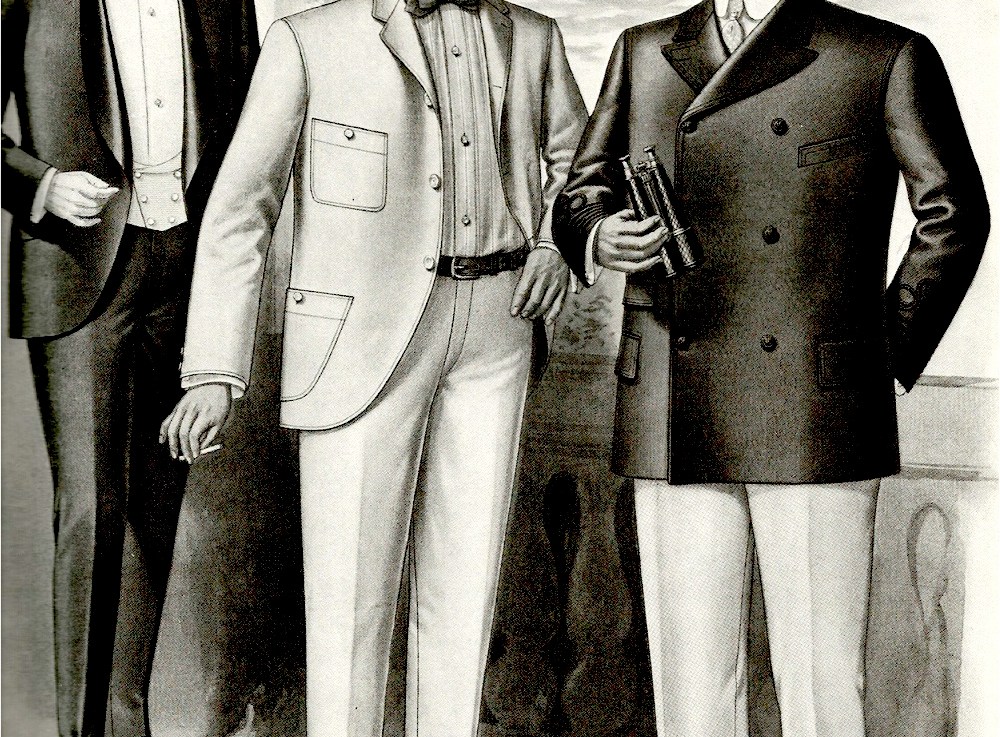
Illustrations from the Jno. J Mitchell Publishing Company’s The Sartorial Art Journal, intended to assist tailors in their consultations with clients about bespoke menswear. I’m assuming they weren’t intended to be but these look rather homoerotic to me, in their own splendidly buttoned-up fin de siécle kind of way. Check out this little cruise:

View original post 30 more words

“Kokkuri-sama, please descend…”

“Kokkuri-sama, please descend…”

Alistair's avatarADOXOBLOG

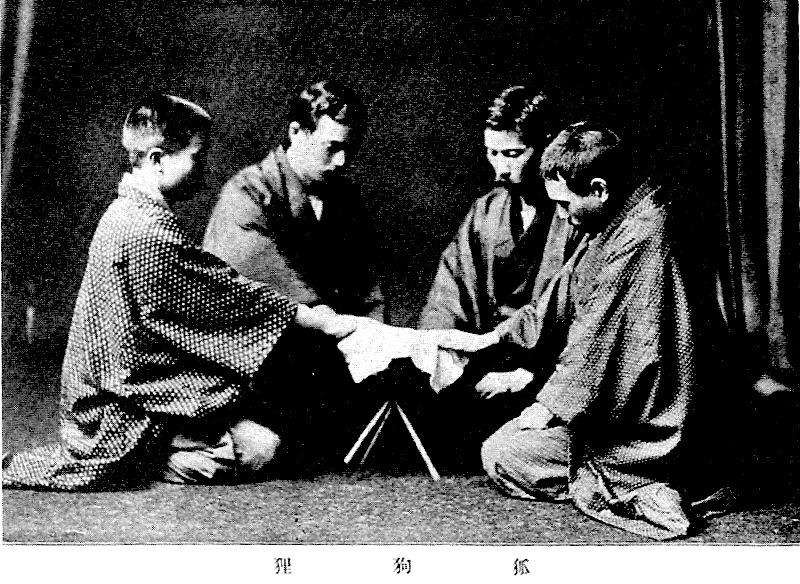
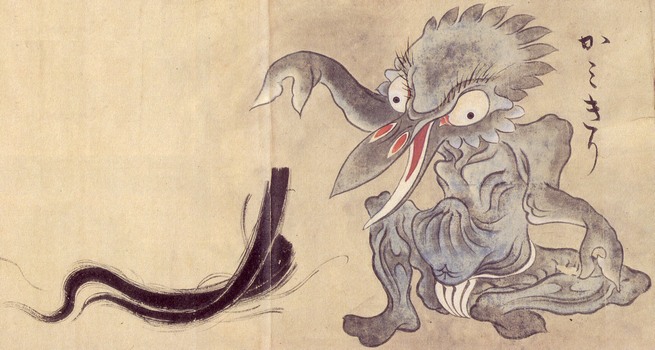
A sequel of sorts to Turning the tables from a while back; the Meiji-era Japanese version of contacting the spirit world through the medium of moving furniture and incomprehensible messages. Kokkuri consisted of three bamboo rods connected to make a tripod, with a round tray or lid balanced on top. As with the Western Ouija Board, three or four people would lightly touch the lid. One person chanted “Kokkuri-sama, Kokkuri-sama, please descend, please descend. Come now, please descend quickly.” Note that -sama is the level of honorific politeness above -san, a bit like saying “Mr. Kokkuri, sir” although there isn’t really a direct English equivalent. After about ten minutes of this, the person says “If you have descended, please tilt towards [somebody present].” If all was well, the lid would move and could be used as a way for whoever or whatever had “descended” to answer questions.

View original post 219 more words

Hyaku-monogatari

Hyaku-monogatari

Alistair's avatarADOXOBLOG

Edo horror stories

The hyaku-monogatari (“one hundred stories”) were told in Edo-era Japan when people came together to exchange kaidan, stories of ghosts, monsters, mysterious (fushigi) happenings, and frightening (osoroshiki) characters. This gatherings, hyaku-monogatari kaidan kai, can be conceived of as a kind of market for exchanging stories. These might be real (or claimed) personal experiences, stories people knew from elsewhere, or a story of their own devising. There may not always have been exactly one hundred stories; as in English, saying there are “a hundred” or “hundreds” of something can be deliberate hyperbole, just a way of saying there are more than you can easily count. Stories of mysterious and frightening things (mononoke) were and are indeed endless in number.

Wakan kaidan hyōrin, 1718:

“First light one hundred wicks with blue paper around them, and hide all weapons. Now, for…

View original post 193 more words

Dress like a Tartar

Dress like a Tartar

Alistair's avatarADOXOBLOG

A selection from a folder on my hard drive that I’ve not touched for ten years, containing numerous pictures of archaic costume from around the world. What a shame it is that these are archaic; what a shame that the most boring and generic items of Western apparel have almost entirely become the whole world’s de facto uniform. And how beautiful and diverse a globally connected world could be if it meant we all had access to a massively expanded potential wardrobe of practical modern items derived from these local clothes that were still in wear during the nineteenth century and well into the twentieth in some cases. You probably wouldn’t want to go for the full Malay actress or Kalmuck gentleman, but there’s shoes, dresses, coats and even hats here– although nobody really knows how to wear hats nowadays, at least not without looking like a complete tool– that…

View original post 139 more words